
 MENU
MENU 

EECS Faculty receive 2010 HP Labs Innovation Research Awards

 Enlarge
Four EECS faculty teams have been selected to receive 2010 HP Labs Innovation Research Program (IRP) awards. The Innovation Research Program is designed to create opportunities for colleges, universities, and research institutes around the world to conduct breakthrough collaborative research with HP. The investigators from Michigan are:
Prof. Mark Kushner
Project Title: “Modeling of Micro-Dielectric Barrier Discharges”
HP Labs Theme: Digital Commercial Print
Prof. Stéphane Lafortune and Prof. Scott Mahlke
Project Title: “Gadara: Dynamic Deadlock Avoidance in Concurrent Software via Discrete Control”
HP Labs Theme: Intelligent Infrastructure
Prof. Trevor Mudge and Prof. Thomas Wenisch
Project Title: “Disaggregated Memory for Energy-Efficient Data Centers”
HP Labs Theme: Intelligent Infrastructure
Prof. Kang G. Shin
Project Title: “Flexible Resource Management in Highly Available Virtual Data Centers”
HP Labs Theme: Intelligent Infrastructure
 Enlarge
Mark Kushner will continue research funded by HP in 2009 into micro-plasmas. These microscopic sources of ionized gases are critical components in the development of next-generation electrophotography and commercial print engine technologies. The collaboration with HP Labs will provide an opportunity to investigate and understand plasma physics phenomena and translate that understanding into society-benefiting technologies.
 Enlarge
 Enlarge
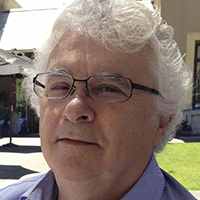
St�phane Lafortune and Scott Mahlke will continue research funded by HP in 2008 and 2009 on a project called Gadara. Gadara is the name for a controller that aims to eliminate software deadlocks using discrete control theory. It works by analyzing a program to find potential deadlocks, and then inserting control logic into the program to ensure that the program cannot deadlock. The team of U-M and HP researchers have developed the compiler technology which enables Gadara to operate on real-world applications.
 Enlarge
 Enlarge
Trevor Mudge and Thomas Wenisch will continue research funded by HP in 2009 into the use of disaggregated memory to enhance the energy efficiency of data centers. Disaggregation refers to the separation of memory from other data center server components and linking together of those components through an interconnect. In modern blade servers, the memory sub-system is one of the most significant contributors to both purchase price and energy consumption. Disaggregation holds the promise of substantially reducing these costs.
 Enlarge
Kang Shin will continue research funded by HP in 2009 into techniques for providing fault-tolerance and resource-utilization efficiency for virtualized data centers. The scope of the project includes memory-efficient mechanisms for protecting and restoring virtual machines and automated failure recovery in real time, taking into account resource availability. A long-term objective of this research is to build a framework of flexible resource management facilities, taking into account all resources utilized in a virtual data center, to achieve intelligent autoamtion for load balancing, reliability, and energy efficiency.
About the Awards
�Our goal with the HP Labs Innovation Research Program is to inspire the brightest minds from around the world to conduct high-impact scientific research, addressing the most important challenges and opportunities facing society in the next decade,� said Prith Banerjee, senior vice president of research at HP and director of HP Labs. �The University of Michigan has demonstrated outstanding achievement and we look forward to collaborating with it in this dynamic area of research.�
HP reviewed more than 375 proposals from 202 universities in 36 countries on a range of topics within the eight high-impact research themes at HP Labs � analytics, cloud, content transformation, digital commercial print, immersive interaction, information management, intelligent infrastructure and sustainability. More details about the HP Labs Innovation Research Program and worldwide award recipients are available at http://www.hpl.hp.com/open_innovation/irp/2010_results.html.