
 MENU
MENU 

Electrical Engineering and Computer Science (EECS)
Among the leading departments of its kind in the nation, EECS is creating the technology that puts the “smart” into electronics. Our excellence and impact comes through in the work of our two divisions.
EECS at Michigan
Established. Respected. Making a world of difference. EECS undergraduate and graduate degree programs are considered among the best in the country. Our research activities, which range from the nano- to the systems level, are supported by more than $75M in funding annually — a clear indication of the strength of our programs and our award-winning faculty. With this combination of great resources and talent, EECS at Michigan is transforming and improving a wide range of fields that touch all of our lives.
Undergraduate Programs
Computer Science & Engineering
Electrical & Computer Engineering

Graduate Programs
Computer Science & Engineering
PhD, Computer Science & Engineering>
MS/MSE, Computer Science & Engineering>
Electrical & Computer Engineering
Grad programs and Admissions in ECE>
PhD, Electrical & Computer Engineering>
News and Events
Computer Science & Engineering
Electrical & Computer Engineering
Tools for “more humane coding”
Prof. Cyrus Omar and PhD student David Moon describe their work to design more intuitive, interactive, and efficient coding environments that can help novices and professionals alike focus on the bigger picture without getting bogged down in bug fixing.
Snail extinction mystery solved using miniature solar sensors
The World’s Smallest Computer, developed by Prof. David Blaauw, helped yield new insights into the survival of a native snail important to Tahitian culture and ecology and to biologists studying evolution, while proving the viability of similar studies of very small animals including insects.
Events
News
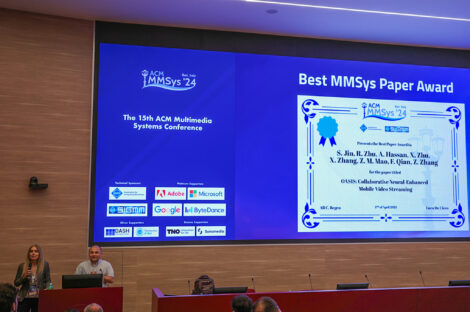
CSE researchers win Best Paper Award at ACM MMSys 2024
The authors were recognized for the excellence of their research on neural-enhanced video streaming.
Roya Ensafi receives Willie Hobbs Moore Achievement Award
The award recognizes Ensafi’s outstanding achievements and contributions to promoting equity in STEM.

Kamal Sarabandi receives Ellis Island Medal of Honor
The national award recognizes the importance of immigrants and their descendents to U.S. economic and social vitality. Honorees are read annually into the Congressional Record.

EECS By the Numbers
Members
Research Expenditures
University
Students, F 2021