Project Overview

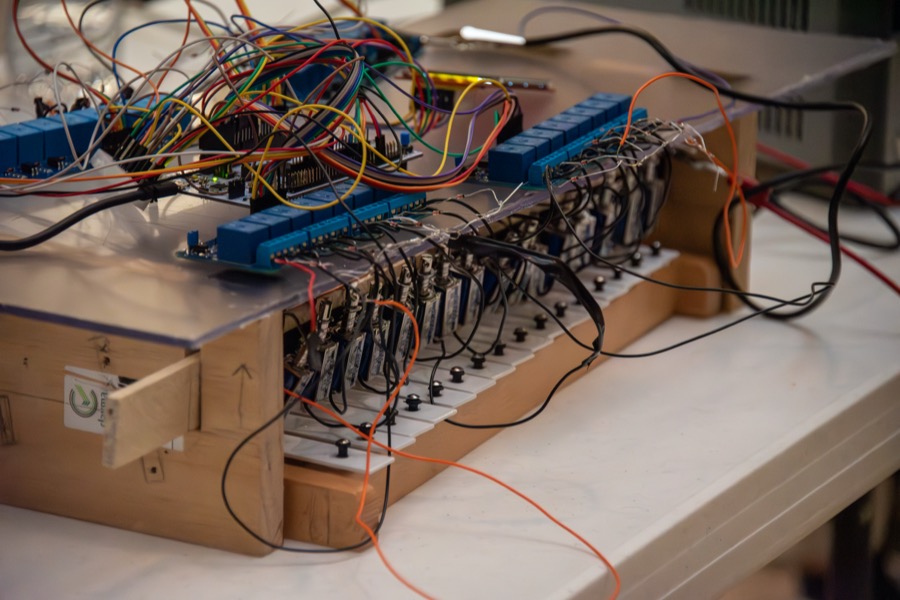
The EECS 373 final project is a semester-long design challenge in which teams of three to four students build a complete embedded system around an ARM Cortex-M4 microcontroller. Teams propose their own device. It must accomplish a clear goal and draw on the core techniques taught in the course: serial bus interfacing (SPI, I2C, UART), device drivers, interrupts, general-purpose timers, and analog-to-digital or digital-to-analog conversion. Each team receives a parts budget and access to a large inventory of lab hardware. The central challenge is system integration: getting sensors, actuators, firmware, and power working together as a reliable device that can be demonstrated live. The semester ends with a public exhibition where teams demo their work to faculty, students, and industry visitors.

Exact due dates and submission methods are listed on the Assignments page.

Project Outline

The project runs in five phases. Each step links to the document that defines its requirements.

  1. 1 Form a Team

    • Ideation Slides: Each student submits slides pitching one or more project ideas.
      Assignment Description
      Ideation Slide Examples
      Slide Template
    • Team Formation Event: An in-class event where students present ideas and form teams of three to four.
      Class Ideations Slides
    • Team Registration: Each team submits one registration form. Registration creates the team's shared project folder, which holds every deliverable for the rest of the semester.
      Team registration form
    • Team Project Folders: Each team will be assigned a Google Drive Project folder. This will constitute your primary work space and location for archiving milestones and assignments.
      Links to Team Project Folders
  2. 2 Propose

    • Final Project Description: This document is the official handout for the project and describes the requirements, deliverables, and grading.
      Final Project Description
    • Proposal Review Sign-Up: Each team books a 30-minute review meeting with the instructors.
      Sign-up sheet TBD
    • Project Proposal and Slides: The proposal document is due the night before the review meeting. It includes a component diagram (modules, data interfaces, voltage and power), a firmware functional outline, and a short slide deck for the meeting.
      Proposal Guidelines
      Proposal Example
      Slides Guidelines
    • Project Pitch Meeting: Teams present their proposal to the instructors and receive feedback on scope, feasibility, and grading.
    • Proposal Revision: Teams revise their proposal based on feedback to earn additional points. Both versions stay in the project folder.
  3. 3 Build

    • Order Parts: Teams order components within their parts budget and draw on the lab inventory.
      Parts ordering instructions
    • Weekly Milestone Reports: Each week, teams report progress on each module, upload a short video of working subsystems, flag concerns, and set goals for the following week. Backup copies go in the project folder.
      Milestone report form: TBD
  4. 4 Exhibit

    • Poster: Teams design and print a poster describing the system, its architecture, and results.
      Poster Guidelines
      Poster Template
    • Project Evaluation Form: Submitted before the expo, this form lists every component and technique the project uses so instructors can credit all of it.
      Project evaluation form: TBD
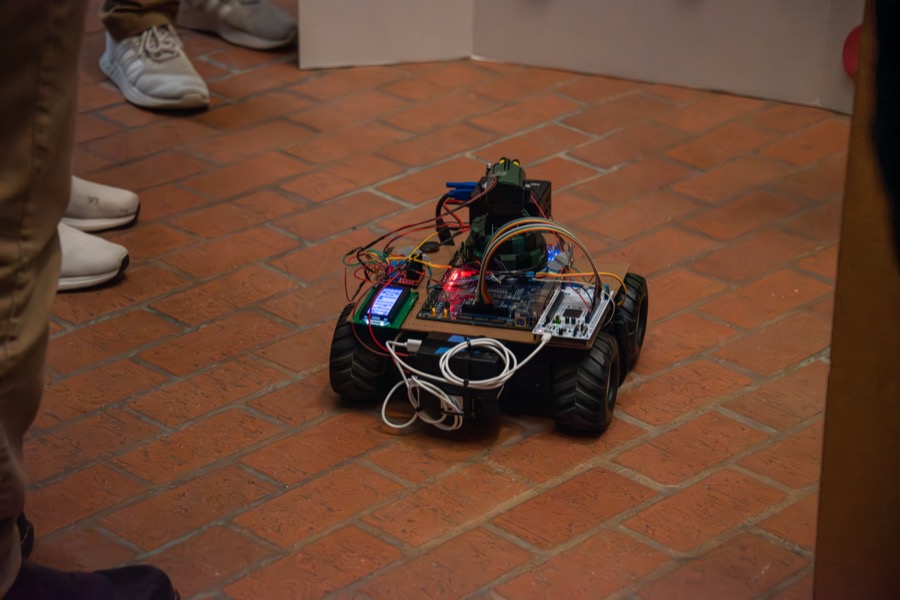
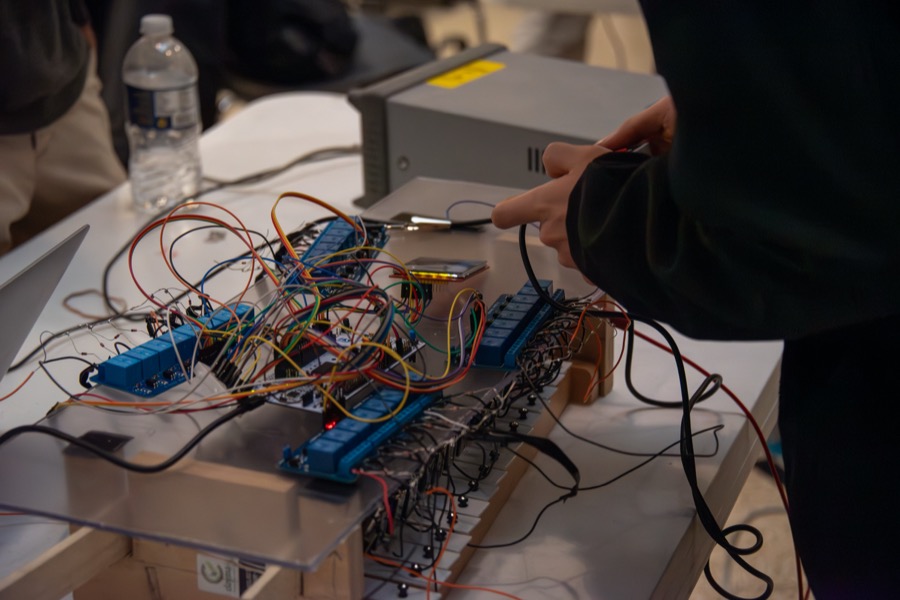
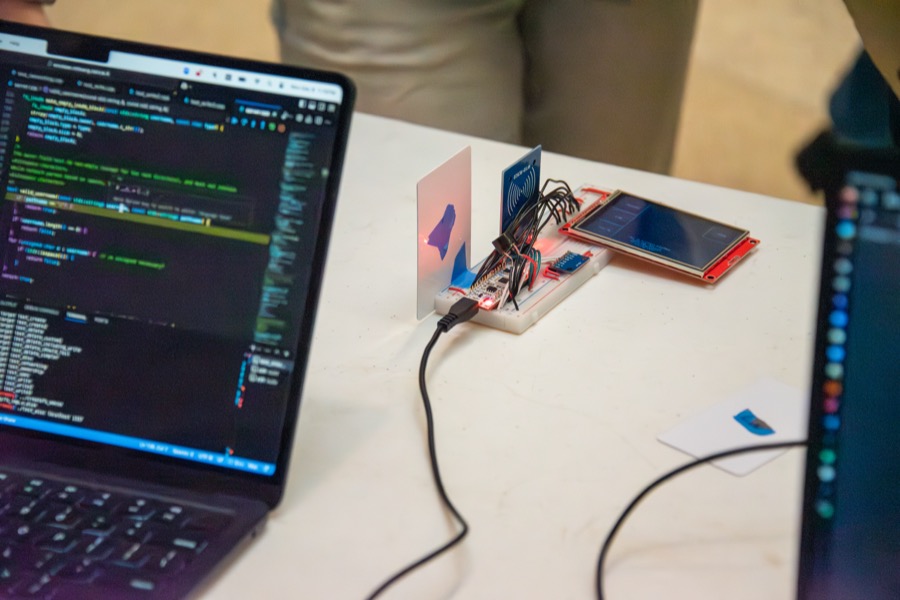
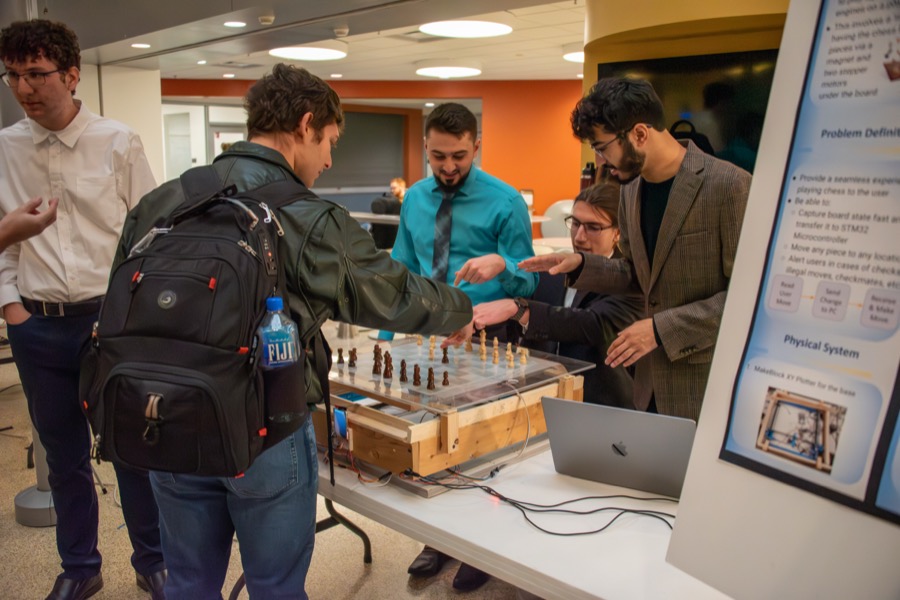
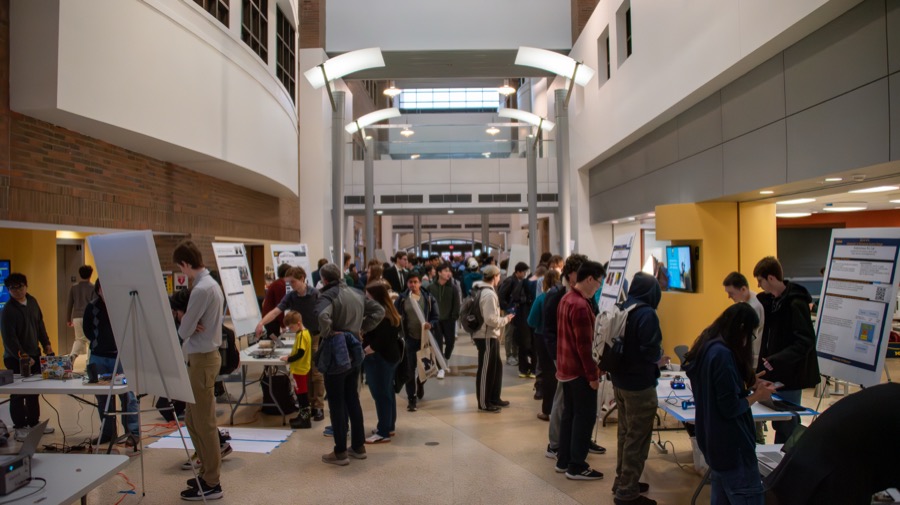
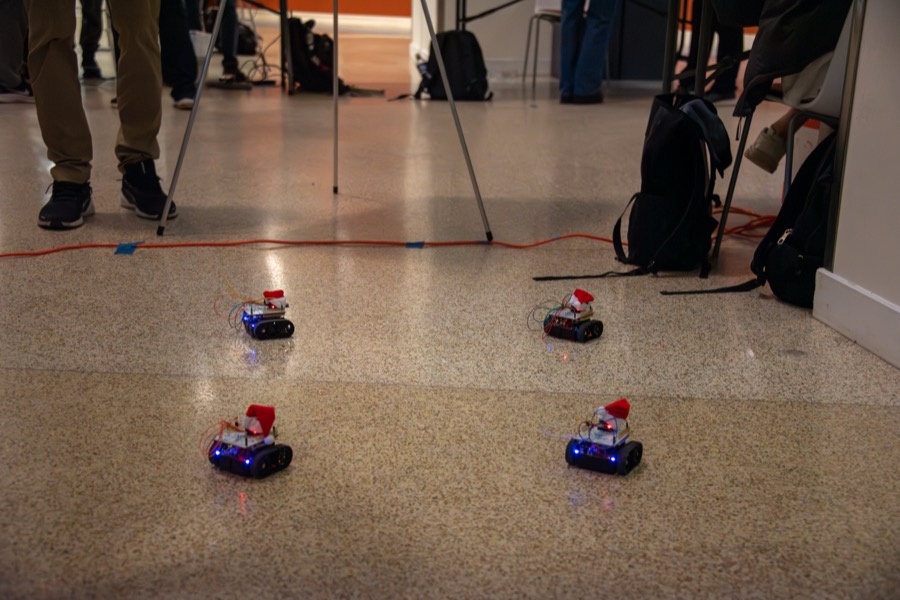
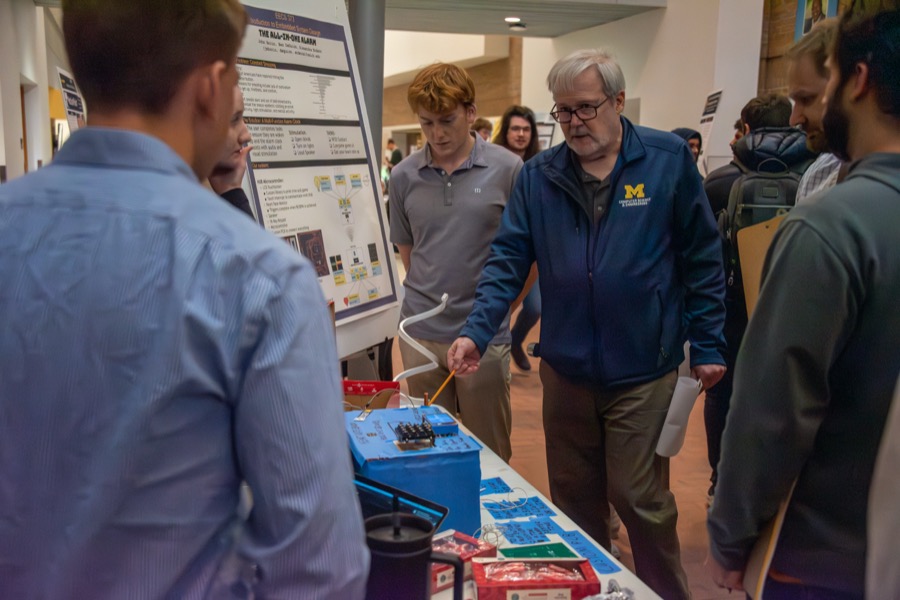
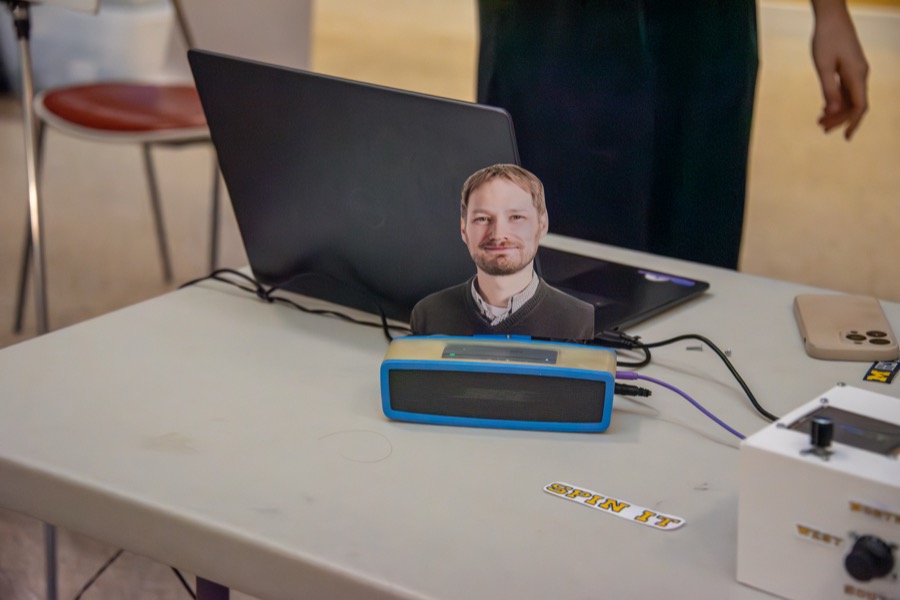
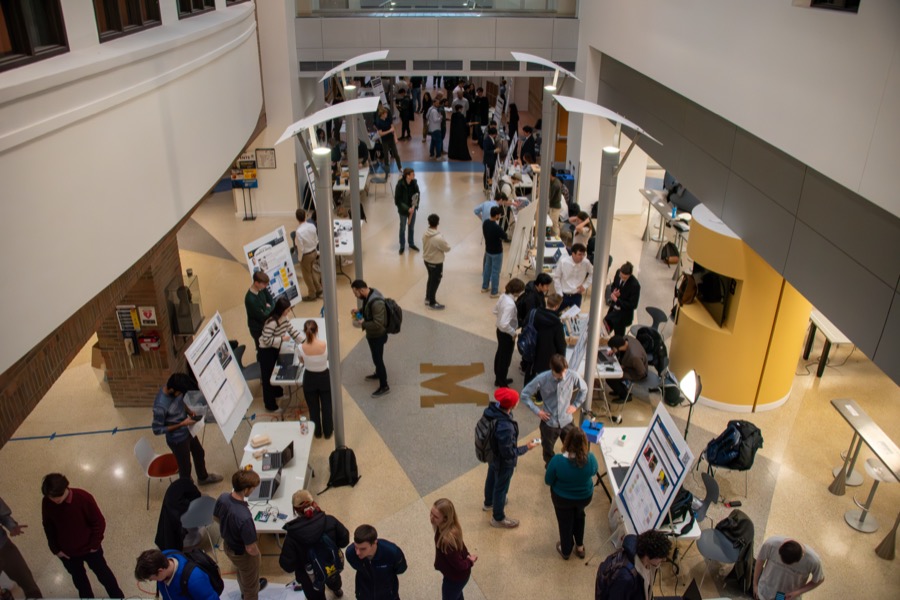
    • Project Expo: Teams demo their working systems live in the EECS Atrium to faculty, students, and visitors.
  5. 5 Wrap Up

    • Project Video: A short video demonstrating the finished system.
      Video guidelines
    • Digital Archive: Teams upload final code, schematics, CAD files, and documentation to the project folder.
      Archive checklist
    • Member Contribution Form: Each student submits individually, describing what each teammate worked on.
      Member contribution form
    • Lab Cleanup: Every student must participate in lab cleanup to receive a grade in the course.

EECS 373 Embedded System Expo
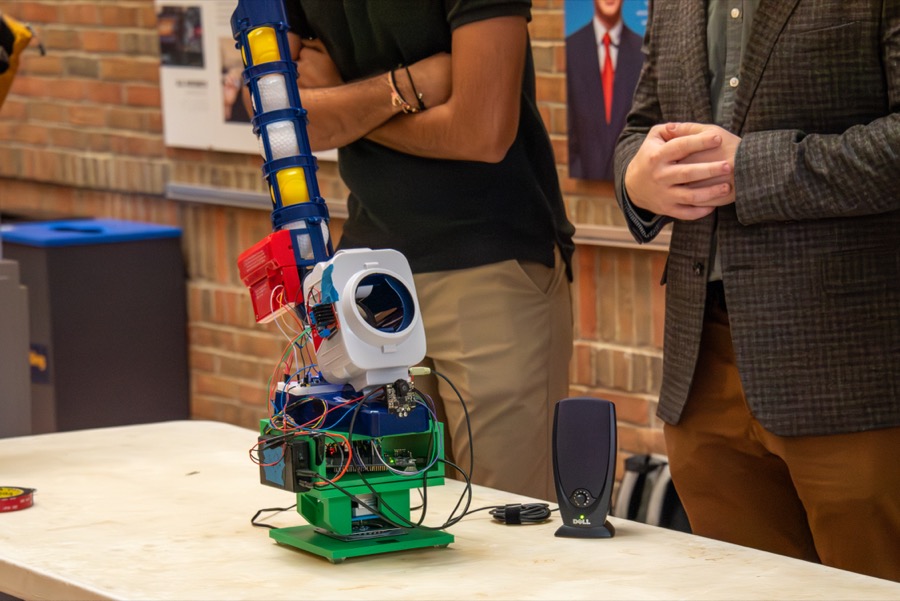
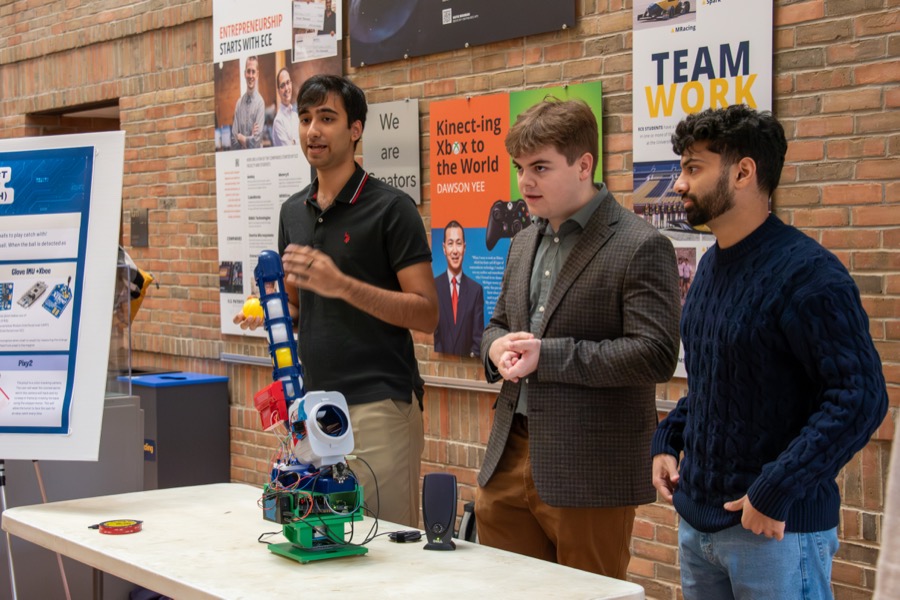
Teams demonstrating their projects at the EECS 373 Embedded System Expo, photo 1
Teams demonstrating their projects at the EECS 373 Embedded System Expo, photo 2
Teams demonstrating their projects at the EECS 373 Embedded System Expo, photo 3
Teams demonstrating their projects at the EECS 373 Embedded System Expo, photo 4
Teams demonstrating their projects at the EECS 373 Embedded System Expo, photo 5
Teams demonstrating their projects at the EECS 373 Embedded System Expo, photo 6
Teams demonstrating their projects at the EECS 373 Embedded System Expo, photo 7
Teams demonstrating their projects at the EECS 373 Embedded System Expo, photo 8
Teams demonstrating their projects at the EECS 373 Embedded System Expo, photo 9
Teams demonstrating their projects at the EECS 373 Embedded System Expo, photo 10
Teams demonstrating their projects at the EECS 373 Embedded System Expo, photo 11
Teams demonstrating their projects at the EECS 373 Embedded System Expo, photo 12